DIY✃ MFA

Academia is collapsing! There must be other ways to learn that don’t take us far from our communities and trap us in debt!
This is a self-directed creative practice program focusing on language, embodiment, and experimental education. My curriculum emphasizes the integration of writing, visual arts, somatic practices, and performance over a 2-3 year period.
This endeavor was inspired by the DIY PhD program offered by The School for the Ecocene.
-
Nox — Anne Carson
After Lorca - Jack Spicer
What Work Is — Philip Levine
Staying Alive — Vandana Shiva
The Muse Learns to Write — Eric Havelock
Towards a Poor Theater — Jerzy Grotowski
From Ritual to Theatre: The Human Seriousness of Play — Victor Turner
On How We Mistook the Map for the Territory — Sylvia Wynter
Poetry Is Not a Luxury — Audre Lorde
Food of the Gods — Terrence McKenna
The Archaic Revival — Terrence McKenna
Meeting the Universe Halfway — Karen Barad
You Are Not a Gadget — Jaron Lanier
Story of Your Life — Ted Chiang
Eros the Bittersweet by Anne Carson
Now is the Time to Open your Heart — Alice Walker
Quantum Listening — Pauline Oliveros
Deep Listening: A Composer’s Sound Practice — Pauline Oliveros
Jitterbug Perfume - Tom Robbins
The Doors of Perception - Aldous Huxley
Collected Poems – Robert Lax
Ecodeviance: (Soma)tics for the Future Wilderness — CAConrad
A Beautiful Marsupial Afternoon: New (Soma)Tics — CAConrad
The Verse for Now — Jacqueline Suskin
Hardly War by Don Mee Choi
Mercury, A Sand Book – Ariana Reines
Mucus in My Pineal Gland – Juliana Huxtable
Weaving Sundown in a Scarlet Light - Joy Harjo
Psych Murders – Stephanie Heit
Liberated to the Bone – Susan Raffo
Rituals for Climate Change – Naomi Ortiz
Schizophrene – Bhanu Kapil
Always Coming Home – Ursula Le Guin
Heaven and Earth: A Cosmology - Albert Goldbarth
The Mushroom at the End of the World — Anna Lowenhaupt Tsing
Decolonising the Mind: The Politics of Language in African Literature — Ngũgĩ wa Thiong'o
Decolonizing Consciousness — Shilpa Ashok Pandit
The Psychedelic Future of the Mind — Thomas Roberts
Community Collaboration
A key component of this curriculum is connecting to the local creative eco-systems of Detroit and Northern New Mexico. These two distinct landscapes serve as my primary classrooms, each offering profound and contrasting lessons on what it means to reclaim our labor and relationship to earth. Both Detroit and Northern New Mexico are holy grounds for alternative world-building because they are both zones of intense systemic extraction. Detroit was the birthplace of the assembly line — where the human body was first mechanized for capitalist profit. New Mexico is the crucible of the nuclear age — where the raw elements of the earth were weaponized to invent total annihilation. Like Detroit, weird people building weird things are drawn to New Mexico. These places share a deep, perhaps unexpected kinship: people who do not wait for institutional permission to build new realities and decompose what is not working.
Mentors/Teachers:
The Hinterlands (Physical Theater Apprenticeship - Spring 2025)
Jacqueline Suskin (Poetry)
Larry (Consciousness Mentor)
Project Collaborations:
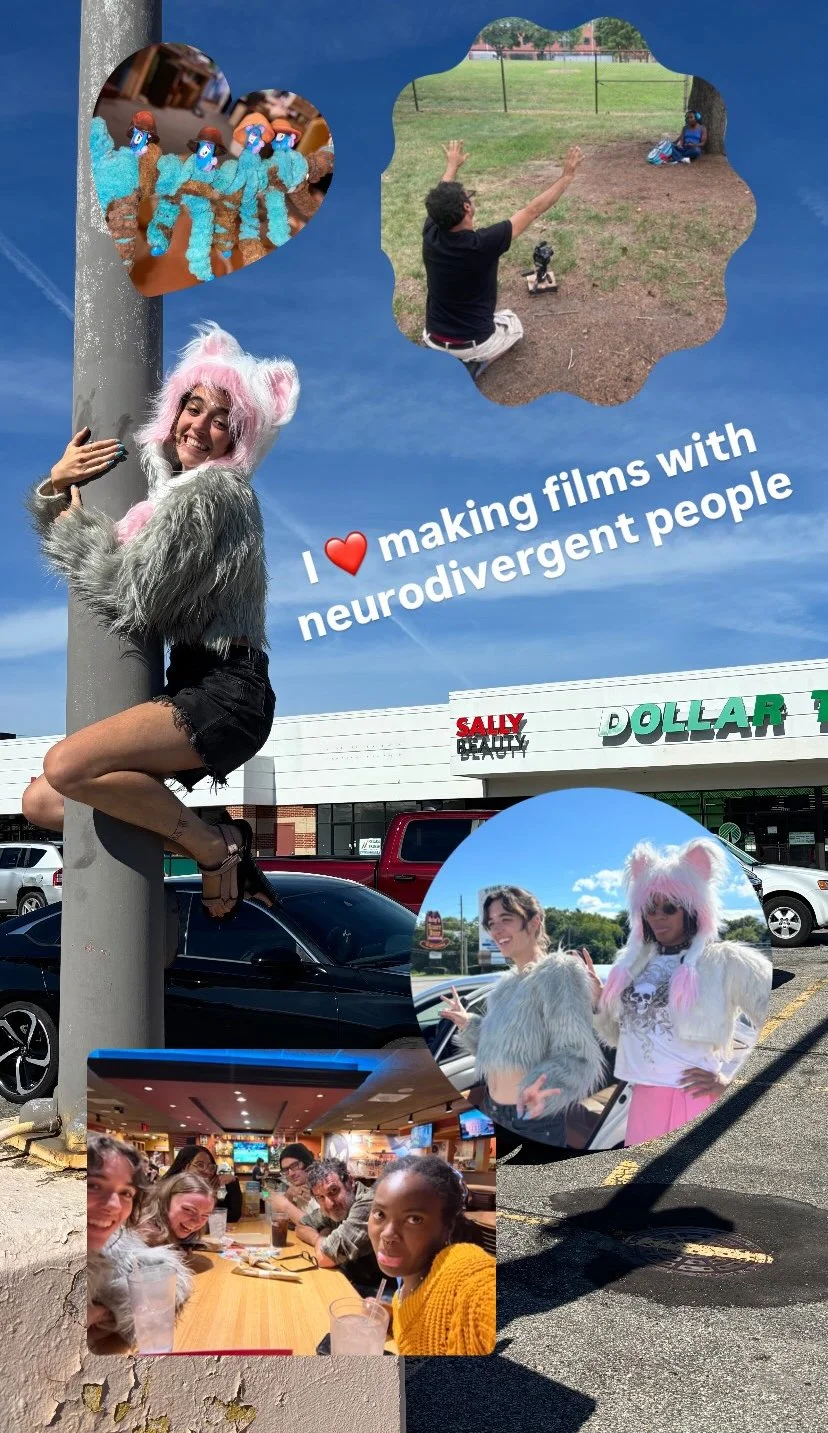
Acting for Tawd Dorenfeld’s movie SNDS, an autistic horror film
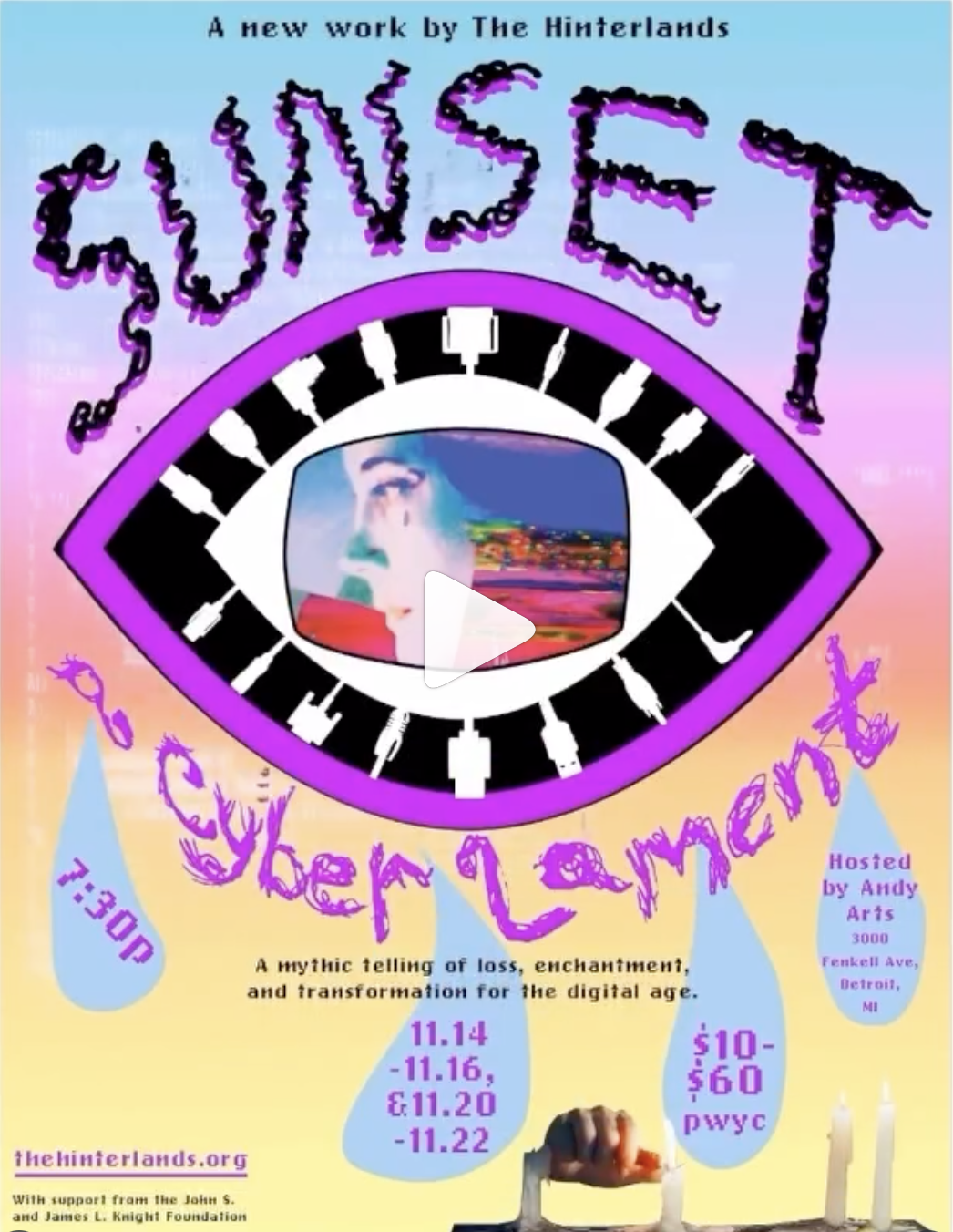
Sound tech for the Hinterlands’ performance Sunset, a cyber lamentation
Dancing for Quality Cinema Band’s new album
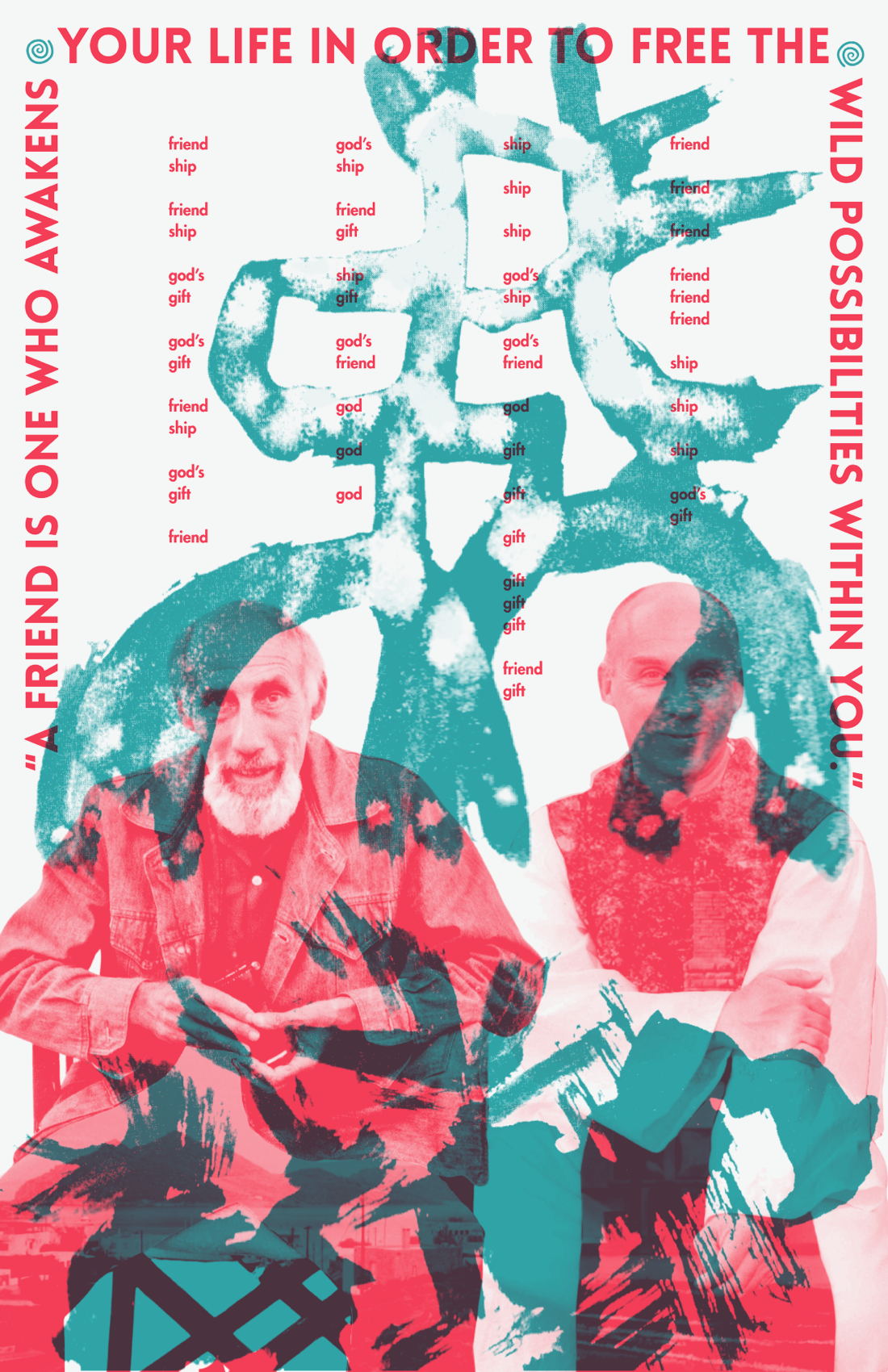
Bridget of the AWE Society taught me how to Risograph print so I could gift a dear friend a poster honoring the friendship of Thomas Merton and Robert Lax
My teaching + facilitation:
Hosted the Somatic Strategy Circus (Oct 2025)
Co-planned Unplug & Plug In: Exploring AI, Crip Art, and Disabled Futures(November 2025) for Detroit Disability Power
Taught Poetry as Ancestral Dialogue at the Detroit Waldorf School (March 2026)
Co-taught Human Photosynthesis and the Imaginal Space with Conner Darling (April 2026)
Archive of Art Experienced
Film Screening of Tea Leaves by Love Streams Films (August 2025)
Bread & Puppet: Our Domestic Resurrection Revolution In Progress! (Sept 2025)
Will You Miss Me? performance by the Hinterlands (Sept 2025)
Nigamon / Tunai performance by Émilie Monnet and Waira Nina (Oct 2025)
Rebetiko puppet performance by Marseille-based Anima Theatre (Oct 2025)
Earth Grief Ritual with Anna Lemler (Nov 2025)
Infinite Images: The Art of Algorithms at the Toledo Museum of Art (Nov 2025)
Contemporary Anishinaabe Art: A Continuation at the Detroit Institute of Arts (Nov 2025)
Dimanche performance by Chaliwaté and Focus Companies (January 2026)
Solo Square Dance by Nic Gareiss (February 2026)
All That’s Left of You directed by Cherien Dabis (Feb 2026)
After the Last Red Sky – Performance by Body Watani Dance (March 2026)
Classes/workshops attended:
Pattern Recognition and Creativity with Conner Darling (February 2026)
Alexander Technique with Movement Research (February 2026)
Klein Technique™ with Movement Research (February 2026)
Feldenkrais® with Movement Research (February 2026)
Winter 2026 Intensive Training with Shua Group focused on releasing techniques and touch
Theatre of the Oppressed Exploration of Carcerality and Abolition with Cydney Heed (March 2026)
Poetics (of performance) + Voice, Body, Song with the Hinterlands (April + May 2026)
I’M NOT HERE RIGHT NOW - Working group and Investigative Performance Project with Addie Ulrey on the places inside us that technology is changing (Summer 2026)
Why
I’m most interested in how language animates and transforms the body, world around us, and consciousness. How is it that words can be both medicine and prison? A tool for expression and suppression? Why are we the only species on this planet that writes?
The invention of the written word is relatively recent. For tens of thousands of years, words lived only in the body through thought turned to sound. This movement from the body to the page marks a profound shift in how humans relate to reality. Ideas could travel vast distances, but oral traditions were lost.
Now, in the age of artificial intelligence, with the invention of large language models, every word ever written down forms the vast soup from which we’re slurping the future. We’ve created machines that process language without lived experience.
Can we integrate embodied speech, written thought, and computational language? Who knows. But we can explore the responsibility language gives us.
SCRAPBOOK